Mobility & Transport
In urban planning, pedestrianisation is one of the most polarising interventions a city can attempt....
<p>In urban planning, pedestrianisation is one of the most polarising interventions a city can attempt. While the long-term benefits are well documented improved air quality, safer streets, stronger local economies, enhanced public space — the early phases of such projects are often dominated by resistance from residents, business owners, and even within planning departments themselves.</p>
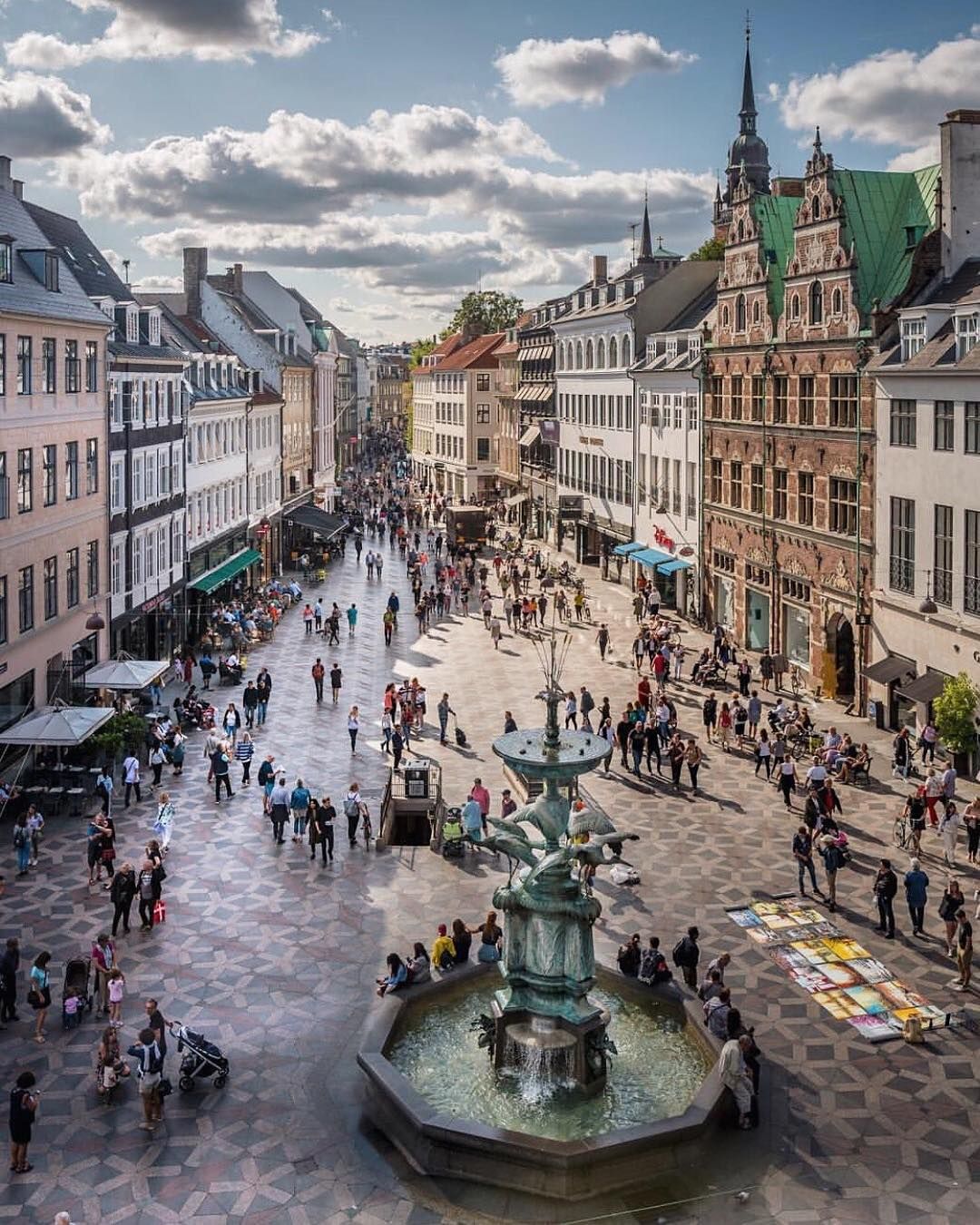
<p>The transformation of <strong>Strøget</strong> in Copenhagen offers a seminal case study on how evidence-based implementation can turn scepticism into enduring public support.</p>
<h2>The Context: Copenhagen in the Early 1960s</h2>
<p>In the post-war decades, Copenhagen like most European capitals embraced the automobile as a symbol of modernity. Strøget, a central street connecting key commercial areas, had become a congested traffic artery . Urban space allocation heavily favoured motor vehicles, leaving narrow and unsafe sidewalks for pedestrians.</p>
<p>When the city proposed in 1962 to <strong>fully close Strøget to vehicular traffic</strong>, stakeholders reacted strongly:</p>
<ul> <li><strong>Merchants</strong> feared that customers would avoid the area without car access.</li> <li><strong>Residents</strong> anticipated delivery disruptions and logistical problems.</li> <li><strong>Planners and engineers</strong> doubted that Danish culture, perceived as less street-oriented than Southern Europe’s, could sustain a pedestrian public realm.</li> </ul>
<h2>The Implementation: Testing Before Committing</h2>
<p>Rather than enforcing a permanent closure immediately, the city adopted a <strong>pilot-first approach</strong> . The street was closed for the <strong>Christmas shopping season</strong> a high-footfall period ideal for measuring economic and social impacts.</p>
<p>Data collection was central to the process:</p>
<ul> <li><strong>Footfall counts</strong> documented pedestrian volume increases.</li> <li><strong>Retail turnover tracking</strong> revealed stable or improved sales .</li> <li><strong>Observational studies</strong> noted increased dwell time and more diverse use of public space.</li> </ul>
<h2>The Outcomes: Evidence Over Assumptions</h2>
<p>After the pilot, results contradicted the dominant fears:</p>
<ul> <li>Pedestrian volumes grew significantly <img alt="♀️" src="https://s.w.org/images/core/emoji/17.0.2/svg/2640.svg"><img alt="♂️" src="https://s.w.org/images/core/emoji/17.0.2/svg/2642.svg">.</li> <li>Retail performance stabilised or improved, even in the absence of car access.</li> <li>Air quality improved ️ and noise pollution decreased .</li> <li>The perceived vibrancy of the area increased, attracting both locals and visitors.</li> </ul>
<p>Within a year, the pedestrianisation became <strong>permanent</strong>. Over subsequent decades, Strøget’s success catalysed a <strong>network of pedestrian and low-traffic streets</strong> across Copenhagen, reinforcing the city’s transition toward human-scale urbanism.</p>
<h2>The Planning Lessons</h2>
<p>For urban planners, Strøget’s story remains a model of <strong>evidence-led transformation</strong>:</p>
<ol> <li><strong>Start with a pilot</strong>: Temporary closures allow planners to gather data and address concerns before making irreversible changes.</li> <li><strong>Measure everything</strong>: Economic indicators, environmental quality, and public space usage must be tracked to counter anecdotal resistance.</li> <li><strong>Communicate transparently</strong>: Sharing real-time results builds credibility with stakeholders.</li> <li><strong>Think beyond the street</strong>: Network effects amplify benefits when pedestrianisation is integrated into broader mobility and public space strategies.</li> </ol>
<h2>Why Initial Opposition is Predictable</h2>
<p>Resistance to pedestrianisation often reflects <strong>cultural inertia</strong>, not a lack of feasibility. Inhabitants of car-dominated environments tend to overestimate the role of vehicle access in economic activity, while underestimating the potential of walkable, people-first spaces. Once the lived experience of a car-free environment is in place cleaner air, safer movement, higher street life intensity opposition tends to dissipate, replaced by <strong>civic pride</strong> and a demand for replication elsewhere.</p>
<h2>Conclusion: The Strøget Effect</h2>
<p>Over 60 years later, Strøget is not only a retail success story but also an enduring example of how <strong>urban design, evidence, and political will</strong> can realign a city’s priorities. For today’s planners facing resistance to pedestrianisation, the lesson is clear:</p>
<ul> <li>Expect the backlash.</li> <li>Pilot before you legislate.</li> <li>Let data drive the narrative.</li> </ul>
<p>As Strøget proves, the street you close today could become the pride of the city tomorrow. Picture source: <a href="https://viajeteca.com/">https://viajeteca.com/</a></p>